
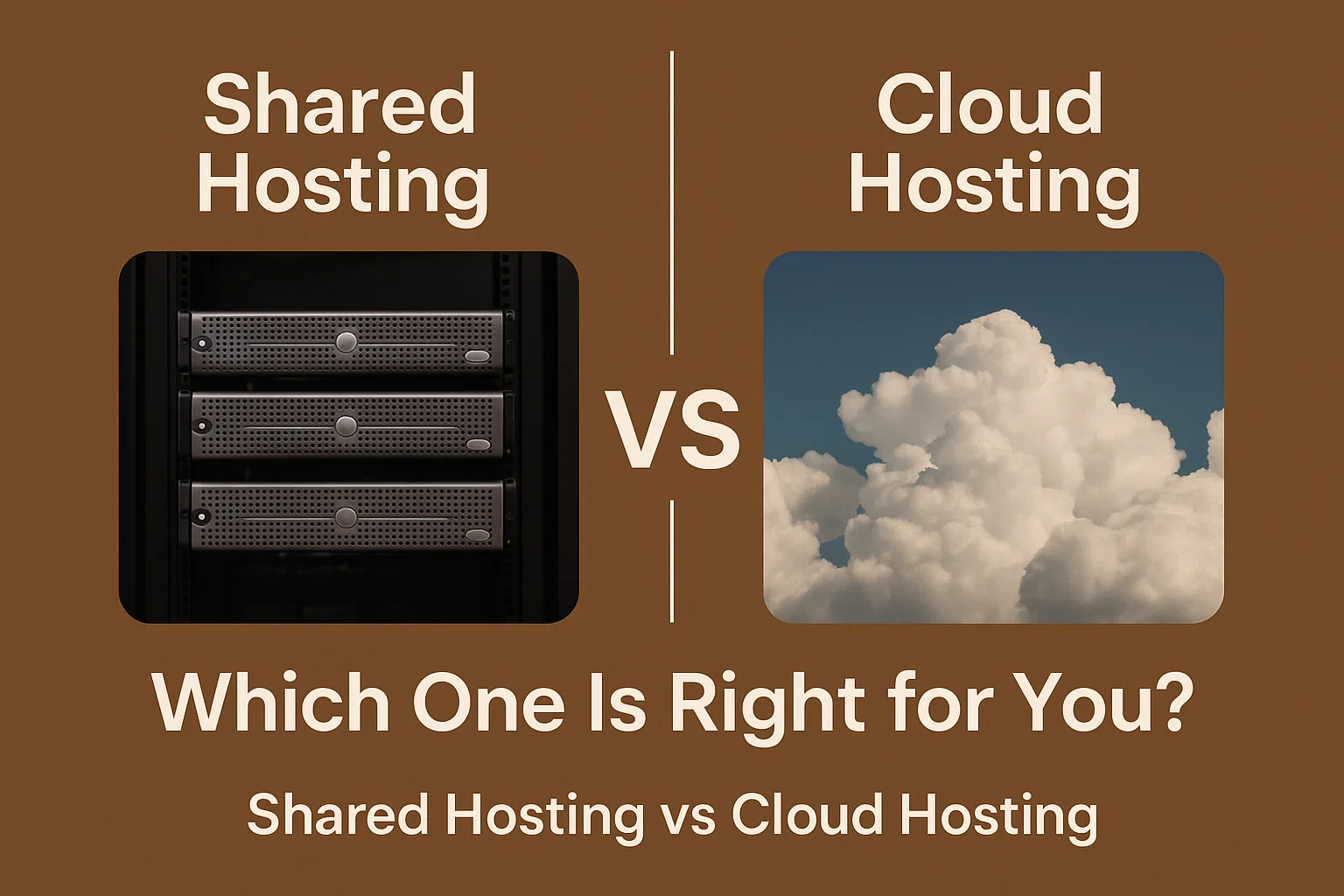
Choosing the right hosting solution is a critical decision for any website owner. The wrong choice can lead to slow load times, poor user experience, and even lost revenue. Two of the most common hosting options — Shared Hosting and Cloud Hosting — often come up when businesses are deciding how to establish or grow their online presence.
While both hosting types serve the core purpose of keeping your website online, they differ significantly in architecture, performance, scalability, and cost. This post dives deep into what each hosting type offers, their pros and cons, and how to decide which is the right fit for your website.
A Historical Perspective
To fully appreciate the evolution of web hosting, it's important to understand where it all began.
In the early days of the Internet, hosting a website required owning a physical server — a costly and complex task. As more businesses sought an online presence in the 1990s, shared hosting emerged as a solution that allowed multiple websites to exist on a single physical server, drastically reducing hosting costs.
However, as websites became more dynamic and traffic-heavy, the limitations of shared environments became apparent. This led to the development of cloud infrastructure, which leverages virtualization and distributed computing to provide greater flexibility, scalability, and performance — giving rise to what we now call cloud hosting.
What Is Shared Hosting?
Shared hosting is a web hosting environment where multiple websites share the same server and its resources — including RAM, CPU, storage, and bandwidth. Think of it like renting an apartment in a building: you share amenities with other tenants, and each unit pays a small fee for the space.
Pros of Shared Hosting:
- Affordable: It’s the most budget-friendly option, ideal for startups and small websites.
- Beginner-Friendly: Simple control panels like cPanel make it easy to manage.
- Pre-configured: Server setup and maintenance are handled by the hosting provider.
Cons of Shared Hosting:
- Limited Resources: Heavy traffic to one website can impact the performance of others.
- Lower Performance: Shared RAM and CPU mean your site might slow down during peak times.
- Security Risks: If one website on the server is compromised, others may be vulnerable too.
- Less Scalability: Not ideal for websites expecting rapid growth or traffic spikes.
What Is Cloud Hosting?
Cloud hosting is a type of web hosting that uses a network of virtual servers (cloud infrastructure) to host websites. These virtual servers draw computing resources from a pool of multiple physical servers, ensuring reliability and scalability.
Instead of storing your website on a single server, cloud hosting distributes it across multiple servers in real time.
Pros of Cloud Hosting:
- High Uptime & Reliability: If one server fails, another immediately takes over.
- Scalability: Easily upgrade RAM, CPU, or storage as traffic increases.
- Improved Performance: Load balancing and caching deliver faster response times.
- Enhanced Security: Many cloud hosts offer built-in security, DDoS protection, and data redundancy.
- Pay-as-You-Go: Only pay for the resources you use, which can be more cost-effective in the long run.
Cons of Cloud Hosting:
- Higher Initial Cost: More expensive than shared hosting (though it offers more value).
- Technical Complexity: Some solutions may require basic server knowledge.
- Varied Pricing Models: Depending on provider and resource usage, costs can fluctuate.
Performance Comparison
| Feature | Shared Hosting | Cloud Hosting |
|---|---|---|
| Speed | Slower during high traffic | Consistently fast, scalable resources |
| Uptime | May experience downtime | Near 100% uptime due to redundancy |
| Scalability | Very limited | Instantly scalable on demand |
| Security | Shared vulnerabilities | Isolated environments and stronger protection |
| Support | Basic support | Usually includes priority or 24/7 support |
| Best for | Small websites, blogs, portfolios | Business sites, eCommerce, apps, growing startups |
Use Cases: When to Choose Which?
Choose Shared Hosting If:
- You’re launching a personal blog or basic portfolio.
- Your website has low to moderate traffic.
- You have a tight budget and no technical background.
- You’re experimenting with your first website or side project.
Choose Cloud Hosting If:
- You run an eCommerce site or an online application.
- Your site experiences traffic spikes or seasonal surges.
- You want consistent performance, speed, and uptime.
- Your business is scaling or has multiple websites to manage.
- You prioritize data security and faster disaster recovery.
Why This Choice Matters for Your Business
Understanding the difference between shared and cloud hosting isn’t just about price — it’s about choosing infrastructure that aligns with your business goals, growth plans, and user expectations.
Imagine launching a new marketing campaign and your site crashes due to high traffic — a common risk with shared hosting. Or picture your eCommerce store slowing down during a festive sale, causing customers to abandon their carts. These scenarios can severely damage your revenue and reputation.
Investing in cloud hosting from the start can help you avoid these pitfalls. While it may come at a slightly higher cost, the benefits — speed, uptime, scalability, and security — often translate to greater ROI over time.
Future-Proofing Your Website
Web technology is evolving rapidly. With increasing reliance on mobile traffic, voice search, AI integrations, and personalized web experiences, websites need to handle more complex demands. Cloud hosting is better equipped to adapt to these needs with its modern architecture and flexible ecosystem.
Meanwhile, shared hosting continues to serve as a reliable entry point for beginners and small projects. It's simple, cheap, and effective — but may not keep up as your site or business grows.
Final Thoughts
The decision between shared hosting and cloud hosting depends on your business type, growth strategy, and performance expectations. Shared hosting is a great stepping stone for new sites, but if you're serious about speed, scalability, and reliability, cloud hosting offers a future-ready foundation.
Before deciding, ask yourself:
- Where do I see my website in the next year?
- How important is speed and uptime to my audience?
- Am I prepared to scale if demand increases suddenly?
Your hosting decision is the backbone of your digital presence. Choose wisely.
